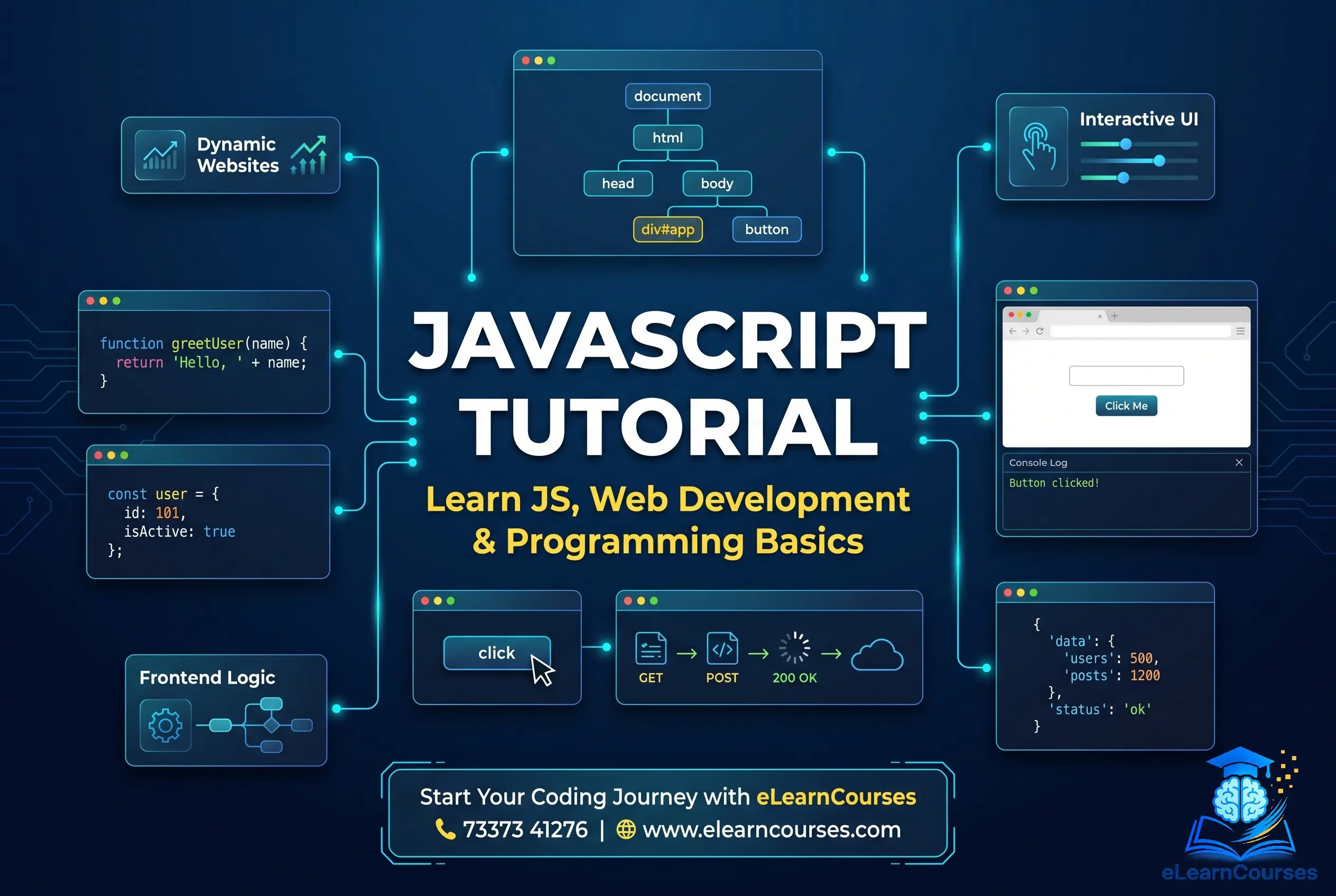
Ready to code? Get a quick JavaScript tutorial tailored for today's web dev. Master core concepts, build interactive pages, and boost your skills fast for 2026 projects. Start coding now!
Questions & answers
Is JavaScript difficult for beginners to pick up quickly?
While JavaScript has depth, its fundamental syntax is quite beginner-friendly, especially when following a quick JavaScript tutorial. Many find the initial learning curve manageable due to extensive online resources and the immediate visual feedback seen in browsers, making early progress encouraging for new coders.
What are the absolute essential JavaScript concepts to learn first in 2026?
For a quick start, focus on variables (<code>var</code>, <code>let</code>, <code>const</code>), data types (strings, numbers, booleans, arrays, objects), operators, conditional statements (<code>if/else</code>), loops (<code>for</code>, <code>while</code>), and functions. These concepts form the bedrock of almost every JavaScript application you'll encounter.
How long does a quick JavaScript tutorial usually take to complete?
A solid quick JavaScript tutorial designed for beginners can take anywhere from a few hours to a few days of focused effort to cover the basics. True proficiency, however, comes with consistent practice over weeks and months, applying what you learn to small projects and building on your foundational knowledge.
What tools do I need for a quick JavaScript tutorial?
You essentially only need a web browser (like Chrome or Firefox) and a text editor. Popular free text editors include Visual Studio Code, Sublime Text, or Atom. These provide a comfortable environment for writing code and debugging, making your quick JavaScript tutorial experience smoother.
Can I really build something useful after just a quick JavaScript tutorial?
Absolutely! Even after a quick JavaScript tutorial, you can create basic interactive elements for web pages, like dynamic menus, form validations, or simple games. The key is to apply each new concept immediately, even if it's just a small, fun project, to solidify your understanding.
Why is learning JavaScript still relevant for web development in 2026?
JavaScript remains indispensable as the language of the web, powering frontend interactivity and increasingly used for backend (Node.js) and mobile development. Its versatility and the vast ecosystem of frameworks and libraries mean that strong JavaScript skills are crucial for any aspiring web developer in 2026 and beyond.
Ever feel like coding is a secret club, and you're stuck outside? Good news: getting into JavaScript, the language that makes the web tick, is totally doable, and you don't need a computer science degree to get started. We're talking about making websites come alive, handling user interactions, and generally turning static pages into dynamic experiences. Think instant form validation, cool animations, and even full-blown web apps.
This quick JavaScript tutorial isn't about deep dives into computer science theory. It’s about getting your hands dirty with practical coding that you can use right away. We’ll cut through the jargon, focus on what really matters for everyday web development in 2026, and get you building stuff fast. Let's make some magic happen!
| Key Aspect | Description |
|---|---|
| Focus | Hands-on practical JavaScript for immediate application |
| Audience | Beginners looking for a quick and effective start |
| Goal | Build foundational skills for interactive web development |
| Year Specific | Relevant practices and tools for 2026 |
Setting Up Your JavaScript Workspace: No Sweat!
Before you write a single line of code, you need a comfortable spot to do it. Think of it like getting your tools ready before starting a home improvement project. The beauty of JavaScript is that you barely need anything special to begin; your browser is already a powerful JavaScript engine.
First off, pick a text editor. Visual Studio Code (VS Code) is a crowd favorite, and for good reason—it’s free, packed with features, and works on pretty much any computer. You can also use something simpler like Sublime Text if you prefer. Second, ensure you have a modern web browser like Chrome, Firefox, or Edge. We’ll be using its developer tools quite a bit, which are essential for debugging your quick JavaScript tutorial projects.
Choosing Your Editor and Browser
Using VS Code is a breeze. Just download and install it from their official website. Once open, create a new file, save it as an .html file (e.g., index.html) and link your JavaScript file (e.g., script.js) within it. This setup is the standard for most web projects and makes it easy to see your code in action.
Your web browser is your canvas. Open your index.html file directly in your browser. To see your JavaScript output or any errors, right-click on the page and select
Key highlights
- Grasp JavaScript fundamentals in record time. - Learn practical coding techniques for real-world web projects. - Troubleshoot common JS errors like a pro. - Unlock interactive web development skills for 2026.
In pictures
Javascript Tutorial For Beginners The Ultimate Proven Guide To Master Roadmap Learn From Scratch 2026 Lastcolumn Complete Learning JS In 2026 Basics Beginner Gui 2026 Multi Language V1 19204 2026 V1 19204 Cheatsheet 2026 Quick Reference Whatsapp Image 2026 At AM 2026 Essentials Quickstart 2026 023 Java Script 2026 023 2026 Full Course 2026 Maxresdefault Performance Making Your Apps Fast 2026 DEV Community H3LDEJ1HRP13KWFV2A9O Features You Should Be Using 2026 Hero Best Free Courses And Tutorials 2026 2X 2026 2026 2026 How 2026 Aivshuman Aicoding Youtube.
Javascript Tutorial For Beginners Quick Start 2026 Youtube Maxresdefault Best In 2026 Designveloper 2022 200 Videos On 2026 Projects 2026 Ranked Ideas Scrimba Guide 2026 Essentials 2026 Quickstart Coursera Xdpcoursepackt Mtslb How To Learn 2026 Complete Roadmap Opengraph Image Getting Started With Fundamentals Of Coding Cover Beginner S 2026 Next Js Courses And Tutorials 2026 A Smarter Way Learning Methods Ultimate Cheat Sheet PDF Comprehensive Reference Il 794XN 6293512347 OVK4 794XN 6293512347 OVK4 Event Handling Wins.
Fast Javascript Tutorial For Beginners Master Web Development Quickly Introduction 2026 Helpful Guide Complete Overview Exploration Next Js Pages Router React Intl 2026 Intlpull Blog En Nextjs 2026 Learn Ext Online Best Tutorials In 2026 IMAGE1 Udemy Beginner To Advanced One Course 2026 Free Image What Are The Ways 2026 Metana Explained 2026 Launchidea Education Earning State Of 2026 Dev Newsletter Cover Og 2026 By Diffcozen With 2026.