Understanding what return does in Roblox scripting is crucial for any aspiring developer or gamer looking to optimize their custom experiences. This comprehensive guide dives deep into the return statement its functionalities and best practices within Lua scripting on the Roblox platform. We explore how return helps manage function execution improve code efficiency and enable complex game logic. For the average gamer juggling work family and life mastering these scripting fundamentals can elevate their creative projects making development more enjoyable and less frustrating. Learn to streamline your functions handle values effectively and build more robust Roblox games. This information will empower you to craft smoother more responsive and engaging virtual worlds ensuring your time spent developing is as productive as your gaming sessions. Discover techniques to debug common return related issues and write cleaner more readable code contributing to a more rewarding overall Roblox development journey.
What are the top 5 natural questions about what does return do in Roblox?
1. How do I use the return keyword in Roblox Lua scripting?
2. What is the difference between return and break in Roblox?
3. Can a Roblox function return multiple values?
4. Why is my code after a return statement not running in Roblox?
5. When should I use return nil or no value in Roblox functions?
How to Effectively Use the 'return' Statement in Roblox Lua Scripting
The 'return' statement in Roblox Lua is a fundamental control structure that allows a function to send one or more values back to the code that called it, while also terminating the function's execution immediately. This is crucial for creating modular, efficient, and readable scripts, enabling functions to process data and provide specific outputs. Mastering 'return' enhances your ability to manage data flow, build reusable code, and create more complex and robust game logic within Roblox.
Why is 'return' considered essential for Roblox game development?
The 'return' statement is essential in Roblox game development because it facilitates effective communication between different parts of your script. It allows functions to complete a specific task, such as calculating damage, fetching player data, or checking conditions, and then hand over the result to another function or the main script. This modularity is vital for organizing code, making it easier to debug, maintain, and scale large projects, which is a major advantage for busy developers.
How does 'return' without a value differ from returning 'nil' in Roblox?
In Roblox Lua, a 'return' statement without any specified values implicitly returns 'nil'. Functionally, return and return nil behave identically. Both will terminate the function and send back a 'nil' value. Developers often choose the bare return for brevity when the function's primary purpose is an action rather than providing a meaningful return value, or when exiting early due to an error condition.
What are the performance implications of using 'return' in Roblox scripts?
Using 'return' judiciously can significantly improve performance in Roblox scripts by allowing functions to exit early when conditions are met or tasks are complete. This prevents unnecessary computation, which is vital in complex games with many active scripts. By optimizing function execution, 'return' helps reduce script activity and maintains higher frame rates, providing a smoother experience for players across various devices, including mobile and PC.
Can 'return' be used in any type of function in Roblox, including event handlers?
Yes, 'return' can be used in virtually any type of function in Roblox Lua, including event handlers, local functions, and functions within modules. In event handlers, 'return' will stop the handler's execution. While the return value from an event handler isn't typically captured, using 'return' to exit early based on conditions is a common and effective pattern for optimization and control flow.
What happens if a function in Roblox is called, but its 'return' value isn't used?
If a function in Roblox Lua is called and it returns a value, but the calling script does not assign that returned value to a variable, the value is simply discarded. The function still executes and returns the value, but it's not captured or utilized. While this doesn't cause an error, it indicates potentially wasted computation if the value was intended to be important, highlighting a common oversight in scripting.
How can I practice using 'return' effectively to improve my Roblox coding skills?
To practice using 'return' effectively in Roblox, start by refactoring existing scripts to break down large code blocks into smaller functions that each return a specific result. Experiment with functions that return multiple values, and implement early 'return' statements within conditional logic to optimize performance. Write unit tests for your functions to verify that they consistently return the expected outputs, reinforcing your understanding of 'return's behavior.
Are you one of the millions of busy adult gamers, balancing a demanding job, family responsibilities, and a passion for gaming? You're not alone. The gaming world, especially platforms like Roblox, offers a fantastic escape, a place to unwind, socialize, and even build incredible experiences. With 87% of US gamers regularly dedicating 10+ hours a week to their favorite titles, finding ways to maximize your limited time is key. For those dabbling in Roblox game development, understanding core scripting concepts, like what does return do in Roblox, can feel like another item on an already long to-do list. But what if mastering this one simple keyword could save you countless hours, prevent frustrating bugs, and open up a world of more efficient and powerful game creation?
This guide is designed for you. We know you value practical, actionable advice that cuts through the hype. You want to build fun, engaging games for your kids, friends, or just for your own satisfaction, without getting bogged down in overly complex jargon. Understanding the return statement in Roblox's Lua scripting isn't just about syntax; it's about optimizing your workflow, improving game performance, and ultimately making your development journey more rewarding. Let's demystify return together, ensuring your precious gaming and development time is spent creating, not debugging.
What Exactly Does the 'return' Statement Do in Roblox Lua?
In Roblox's Lua scripting, the return statement serves a fundamental purpose: it immediately terminates the execution of a function and optionally sends one or more values back to the part of the script that called the function. Think of it like a dispatcher. When a function finishes its job, return is its way of saying I'm done, and here's the result. This is crucial for controlling the flow of your program, ensuring that functions perform their specific task and then hand off any necessary data for further processing.
For example, if you have a function that calculates a player's score, the return statement would send that calculated score back to the main script. Without it, the score would be calculated but wouldn't be accessible outside the function. This capability is essential for modular programming, allowing you to break down complex problems into smaller, manageable functions that communicate effectively.
Why is 'return' So Important for Efficient Roblox Scripting?
Efficiency is paramount, especially when creating experiences that run smoothly across various devices, including the mobile phones where a significant portion of Roblox's global player base (including many busy adults) enjoys their games. The return statement directly contributes to efficient scripting by preventing unnecessary code execution. When return is encountered, the function stops immediately, meaning any code written after it within that function will not run. This prevents wasted computational resources, which can be critical for maintaining high frame rates and a responsive user experience in your Roblox games.
Beyond performance, return also promotes cleaner, more organized code. By clearly defining what a function outputs, it makes your scripts easier to read, understand, and debug. This is a huge time-saver for anyone who juggles their gaming hobby with a busy life, as it means less head-scratching over old code and more time building new features or simply enjoying a game with friends.
How Does 'return' Pass Values Back From a Function?
Passing values back from a function using return is straightforward but incredibly powerful. When you use return followed by one or more expressions, the values resulting from those expressions are sent back to the caller. The order of the values matters, as they are returned as a tuple or multiple results. The calling script can then assign these returned values to variables.
Consider a function named calculateDamage(playerAttack, enemyDefense). This function might perform calculations based on the input parameters and then use return finalDamage to send the computed damage value back. The script that called calculateDamage can then store this finalDamage in a variable, perhaps named damageDealt, and use it to update the enemy's health. This mechanism allows functions to be reusable and provides a clear input-output contract, simplifying complex game mechanics and making your scripts more predictable.
Can a Function Have Multiple 'return' Statements?
Yes, a function in Roblox Lua can definitely have multiple return statements. However, it's crucial to understand that only one of them will ever execute. As soon as any return statement is encountered, the function immediately terminates. This feature is commonly used within conditional logic, such as if/else if/else blocks, to provide different return values or to exit the function early based on specific conditions.
For instance, a function checking if a player can afford an item might have a return true if they have enough money and a return false if they don't. Each return path serves a distinct purpose, guiding the flow of your program based on the current game state. While multiple return statements are perfectly valid, it's good practice to ensure your function remains easy to follow. Overly complex functions with many return points can sometimes lead to harder-to-debug code, so strive for clarity and maintainability.
When Should I Use 'return' Without a Value in Roblox?
Using return without a value in Roblox Lua is appropriate when a function's primary purpose is to perform an action or cause a side effect, rather than to compute and send back a specific result. In such cases, return simply signals that the function has completed its task and execution should continue from where it was called. It's often used to prematurely exit a function if a certain condition is met, preventing further code from running unnecessarily.
Imagine a function called updatePlayerHealth(player, amount). If the player object is nil or invalid, you might want to exit the function immediately using return without passing any value. This prevents errors from occurring with an invalid player reference. Similarly, a function that plays a sound effect or updates a UI element might use return without a value to indicate completion. It's a clean way to manage control flow and avoid deeply nested conditional statements, keeping your scripts organized and efficient.
What Are Common Mistakes to Avoid When Using 'return' in Roblox?
Even seasoned gamers building Roblox experiences can stumble on common scripting pitfalls, and return is no exception. A frequent mistake is placing code after a return statement within the same function block. Remember, return immediately exits the function, so any code following it will simply never execute. This can lead to unexpected behavior or features not working as intended, and it's a prime example of why careful code review is essential for busy developers.
Another common issue is forgetting to actually *use* the returned value. A function might calculate a score or a position and return it, but if the calling script doesn't assign that returned value to a variable, it's effectively lost. Always ensure you are capturing and utilizing the output of functions that use return. Finally, returning too many unrelated values can make functions harder to manage. Strive for functions that do one thing well and return only the necessary outputs, promoting modularity and reducing complexity.
How Does 'return' Impact Performance in Larger Roblox Games?
In larger, more complex Roblox games, where every millisecond counts, the judicious use of return can significantly impact performance. By allowing functions to exit early when their purpose is fulfilled or a condition prevents further action, return minimizes wasted computational cycles. This is particularly relevant in scripts that run frequently, such as those within loops or event listeners, where even small inefficiencies can accumulate into noticeable lag. US gamers, especially those on mobile devices or older PCs, greatly appreciate optimized games that run smoothly.
Think about a game with hundreds of NPCs or dynamic elements. If each object's update function unnecessarily processes information because it lacks an early return when a condition isn't met (e.g., the NPC is out of range, or an item is inactive), the collective overhead can be substantial. Efficient use of return helps keep your game's script activity lower, leading to better frame rates, reduced latency, and a more enjoyable experience for players across all platforms. This focus on performance optimization is a key trend in 2026 gaming, as players expect seamless experiences.
Are There Alternatives to 'return' for Certain Scenarios in Roblox?
While return is the primary method for exiting functions and passing values, sometimes other scripting patterns or concepts might seem like alternatives or complements. For instance, modifying global variables or passing tables by reference can allow a function to affect data outside its scope without explicitly using return to send a value back. However, these methods come with their own set of challenges, often making code harder to track and debug, especially for a developer with limited time.
Generally, it's considered best practice to use return for explicit value passing. Modifying global state directly (side effects) should be done sparingly and deliberately, as it can lead to what's known as spaghetti code, where data flow is unpredictable. For simply exiting a function without passing a value, a bare return is the most straightforward and clearest approach. Stick to return for clear input-output contracts in your functions; it's the most robust and maintainable pattern for most scenarios in Roblox development.
How Can Mastering 'return' Improve My Roblox Game Development Skills?
Mastering the return statement goes beyond just understanding syntax; it fundamentally elevates your approach to Roblox game development. It empowers you to write more modular code, breaking down large, unwieldy scripts into smaller, more focused functions that each perform a specific task. This modularity makes your projects much easier to manage, scale, and debug. As an adult gamer balancing life, this means less time wrestling with monolithic scripts and more time actually playing or building new, exciting features.
Furthermore, a solid grasp of return enables you to implement more complex game logic with greater confidence. You'll be able to create functions that reliably calculate damage, determine outcomes, or retrieve player data, knowing precisely what values you'll receive back. This precision leads to more robust, bug-free games that provide a smoother experience for players. Ultimately, understanding return is a cornerstone skill that will make you a more efficient, confident, and capable Roblox developer, transforming your ideas into polished realities.
What Are Some Advanced Uses of 'return' in Roblox Scripting?
Beyond its basic function, return can be leveraged in more sophisticated ways in Roblox Lua. One advanced use is returning multiple values, which is a powerful feature of Lua. You can return several variables, and the caller can assign them to multiple variables. This is excellent for functions that need to calculate and provide several related pieces of information simultaneously, like return x, y, z for coordinates.
Another advanced application involves using return with closures or higher-order functions. You can return a *function* from another function, allowing for powerful functional programming patterns where functions are treated as first-class citizens. This is particularly useful for creating customizable event handlers or factory functions that generate other functions on the fly. While these concepts might seem complex initially, understanding them can unlock new levels of flexibility and code elegance in your Roblox creations, allowing for dynamic behaviors and advanced system designs often seen in trending social gaming experiences.
Conclusion
Understanding what does return do in Roblox scripting is more than just learning a keyword; it's about embracing a foundational principle of efficient and effective programming. For the busy adult gamer developer, every moment spent on a project counts, and utilizing return correctly is a direct path to cleaner code, fewer bugs, and better-performing games. From controlling function flow to optimizing performance across diverse devices, return is your ally in crafting the engaging, high-quality experiences you envision.
Remember, modularity, clarity, and efficiency are the hallmarks of great Roblox development. By integrating the insights from this guide, you're not just writing code; you're building a more enjoyable and sustainable development process. Keep building, keep creating, and most importantly, keep having fun! What's your biggest scripting challenge in Roblox? Comment below and let's tackle it together!
FAQ Section
What is the main purpose of the 'return' keyword in Roblox Lua?
The main purpose of the 'return' keyword in Roblox Lua is to terminate the execution of a function immediately and optionally send one or more values back to the part of the script that called the function. It acts as an exit point for a function and facilitates communication of results.
Can 'return' be used to exit a loop prematurely in Roblox?
No, 'return' exits the entire function, not just a loop. To exit a loop prematurely in Roblox Lua, you would use the 'break' keyword. 'return' would only work if the loop was contained within a function and you wanted to exit both the loop and the function.
Is it mandatory for every function in Roblox to have a 'return' statement?
No, it is not mandatory for every function in Roblox Lua to have a 'return' statement. Functions that perform actions or have side effects without needing to send a value back often do not include a 'return' statement. If no 'return' is specified, the function implicitly returns 'nil'.
Does 'return' only work with a single value in Roblox Lua?
No, Roblox Lua's 'return' statement can actually return multiple values. You simply list the values after the 'return' keyword, separated by commas, and the calling script can capture these multiple results using multiple variables.
What happens if I place code after a 'return' statement in Roblox?
If you place code after a 'return' statement within the same function block in Roblox Lua, that code will never execute. The 'return' statement immediately terminates the function, making any subsequent lines of code within that function unreachable or dead code.
How does 'return' differ from 'break' in Roblox Lua?
In Roblox Lua, 'return' is used to exit a function and optionally send back values, while 'break' is used to exit a loop (like 'for' or 'while') prematurely. 'return' affects the function's control flow, whereas 'break' affects the loop's control flow.
Return statement terminates function execution Passes values back to caller Essential for efficient script flow Crucial for game logic and debugging Helps manage function output Improves code readability and maintainability Avoids unnecessary processing in scripts
34




Can You Return Roblox Items A 2026 Guide . Can You Return Roblox Items A 2026 Guide . How To Add People Roblox Easily Your 2026 Guide . Roblox R6 Explained What Does It Really Mean Oar2 . Can You Return Roblox Items A 2026 Guide Refund Items On Roblox Step 8



Roblox Me Command What Does It Actually Do NoFilter. Ready To Share How To Publish Your Roblox Game . Unpacking 20000 Roblox Alts What Does It Mean TM 07169 Definitive Guide To Roblox 2026 . Guide What To Buy In Roblox 2026 Smart Choices 2026 Parental Guide For Roblox Usage UnicMinds . Guide What To Buy In Roblox 2026 Smart Choices Roblox Gift Card 25 Usd 495


100 Unofficial Roblox Annual 2026 SL1000 1024x . How To Master Roblox Commentary Your Ultimate Guide Roblox At GDC .webp. What Is Broack Roblox And Why Is It Trending In 2026 . How Does The Roblox Push To Talk Button Work Effectively How To Enable Voice Chat In Roblox 2026.webp. Account Still Terminated After Platform


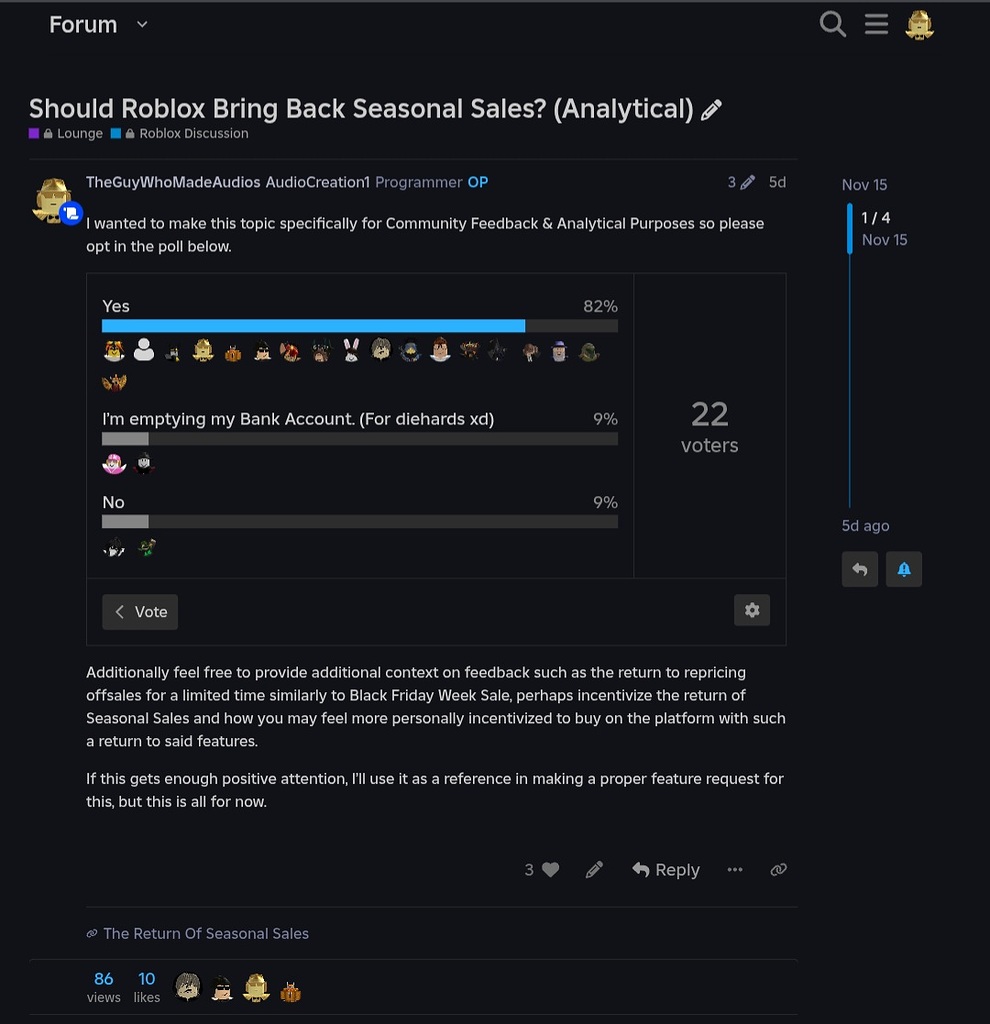
The Definitive Guide To Roblox Annual 2026 Phillips Toys 61HEet5s7ML 1445x . Roblox 2026 YouTube Oar2 . What Is The Roblox ESRB Rating For Young Gamers And Parents . UPDATED How To REFUND Items On Roblox 2026 Gamepasses UGC Robux . The Return Of Seasonal Sales Website Features Developer Forum Roblox 2 990x1024


What Is PopperCam In Roblox And How Does It Work Oar2 . How To Message On Roblox 2026 A Quick Guide . Prepare For 2026 With Roblox Trends TikTok Img. Roblox 2026 Logo REVEALED New Color New Look YouTube Maxres2 . LOGO Roblox 2026 YouTube Maxres2
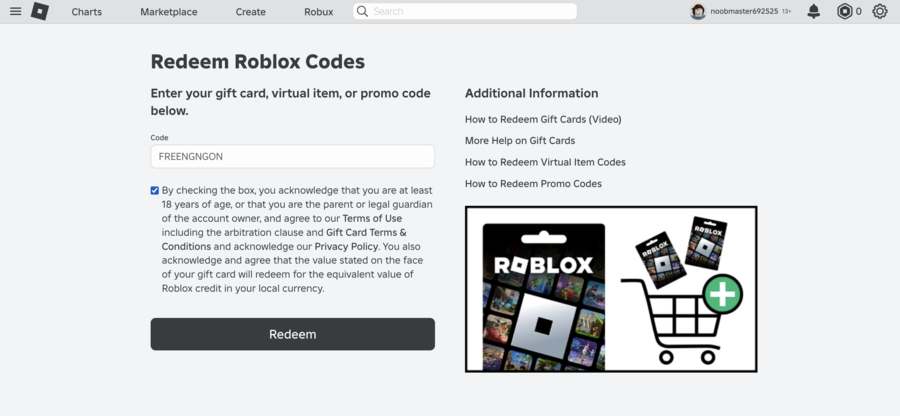



How Can You Redeem Roblox Codes Easily In 2026 Redeem Roblox Codes 1 . Roblox Ra M T T Nh N Ng T I Kho N Ph N Lo I Theo Tu I M I V M R Ng. What Does Return Do Scripting Support Developer Forum Roblox . How To Message On Roblox 2026 A Quick Guide . Can You Return Roblox Items A 2026 Guide Drop Items In Roblox Step 6 Version 2



Roblox Rthro Codes Are They Real For 2026 Roblox Promo Codes . WeMod And Roblox Whats The Deal 810PL 3UrOL. SL1500 . Can You Return Roblox Items A 2026 Guide Latest. ROBLOX IN 2026 YouTube Hqdefault