Unlock the secrets of efficient movement within your Roblox games with the ultimate guide to path scripting in 2026. This comprehensive resource delves into what Roblox path scripts are, how they enable dynamic NPC behaviors, and their critical role in modern game development. Discover why mastering pathfinding is essential for creating immersive, interactive worlds and enhancing player experiences. Learn about the latest updates to Roblox's PathfindingService, advanced AI implementation techniques, and optimization strategies for smooth, realistic character movement. This guide is designed for both budding developers and seasoned creators looking to elevate their Roblox projects with cutting-edge navigational intelligence and seamless gameplay mechanics in the evolving 2026 Roblox landscape.
roblox path script FAQ 2026 - 50+ Most Asked Questions Answered (Tips, Trick, Guide, How to, Bugs, Builds, Endgame) This is the ultimate living FAQ, meticulously updated for the latest Roblox patches and developments in 2026. Whether you're a beginner struggling with your first NPC or an experienced developer fine-tuning complex AI, this guide covers everything about Roblox path scripting. We dive deep into core concepts, advanced techniques, common pitfalls, and future trends, ensuring your characters navigate your worlds flawlessly. Expect honest answers, practical tips, and myth-busting insights to help you build the most engaging and performant Roblox games possible. Consider this your go-to resource for mastering movement mechanics in the ever-evolving Roblox metaverse.Beginner Questions
What is Roblox path scripting and why is it important for game development?
Roblox path scripting teaches non-player characters (NPCs) how to move intelligently around your game world, avoiding obstacles. It's crucial for creating engaging, realistic games, enabling dynamic AI behaviors like chasing players or following specific routes. Proper pathfinding enhances immersion and makes your game world feel alive and responsive.How does Roblox's PathfindingService work and what are its basic functions?
Roblox's PathfindingService is a built-in tool that calculates optimal routes between two points in your game. You provide start and end positions, and it generates a series of waypoints your NPC can follow. It accounts for obstacles automatically, making complex navigation much simpler for developers to implement.Can I make an NPC follow a player using a path script?
Yes, you can make an NPC follow a player by continuously recomputing the path to the player's current position. Since players move, the script needs to regularly update the target destination and regenerate the path. This creates a dynamic and responsive chase mechanic, enhancing player interaction.What are the common errors beginners face with pathfinding?
Beginners often struggle with incorrect `AgentParameters` for their NPC, leading to characters getting stuck or trying to pass through walls. Forgetting to check `Path.Status` after computing a path is another common issue, as it can lead to scripts attempting to use invalid paths. Always verify path success.Advanced Pathfinding Techniques
How can I optimize pathfinding for multiple NPCs on large maps?
Optimize large-scale pathfinding by caching common paths and segmenting long routes into shorter, more manageable sections. Implement raycasting for direct line-of-sight checks to avoid unnecessary path computations. Consider using collision groups to prevent NPCs from pathfinding through each other, improving efficiency.What are hierarchical pathfinding and its benefits for complex worlds?
Hierarchical pathfinding breaks down a large map into distinct regions. NPCs first calculate a high-level path between regions, then a detailed local path within each region. This significantly reduces computational overhead for vast maps, making pathfinding more efficient and scalable in complex environments.How do I integrate custom AI decision-making with Roblox path scripts?
Integrate custom AI by having your AI logic determine *where* an NPC should go (e.g., target player, flee point), then use path scripting to figure out *how* to get there. Pathfinding serves as the navigational component for your AI's broader strategic decisions, allowing for intelligent and adaptive behaviors.NPC Behavior and Interactions
Can pathfinding facilitate complex patrol routes for guards?
Absolutely, pathfinding is perfect for complex patrol routes. Define a series of waypoints for your guard to follow. After reaching one waypoint, the script can calculate a path to the next in the sequence. This creates believable, intricate patrol patterns, making guards seem more vigilant and realistic.How can pathfinding be used for non-combat NPC interactions, like guiding players?
Pathfinding excels at guiding players. A friendly NPC could calculate a path to a quest objective, then lead the player along it, stopping at key points for dialogue. This creates an immersive tutorial or quest experience, making exploration feel more natural and interactive within your game world.Common Bugs & Fixes
My NPC gets stuck on small obstacles; how can I fix this?
This often indicates incorrect `AgentParameters`. Ensure your NPC's `AgentRadius` and `AgentHeight` are slightly larger than its visual model. This gives it enough clearance to navigate tight spaces and over small bumps, preventing it from getting caught on minor environmental details.Why does my path script sometimes fail to find a path?
Path scripts can fail if the start or end points are inside an obstacle, or if no valid path exists between them. Always check `Path.Status` for `Enum.PathStatus.NoPath` or `Enum.PathStatus.Blocked` to diagnose. Adjusting `AgentParameters` or verifying map traversability can often resolve these issues.Performance Optimization
What impact does many NPCs using pathfinding have on server performance?
Many NPCs constantly pathfinding can significantly impact server performance due to continuous computations. Optimize by reducing path recalculation frequency, using shorter path segments, and implementing efficient distance checks before initiating pathfinding. Prioritize critical NPCs for frequent path updates, and less critical ones for slower updates.Integration with AI
Myth vs Reality: Is Roblox pathfinding limited to basic 'follow the leader' mechanics?
Myth: Roblox pathfinding is incredibly versatile and not limited to simple 'follow the leader'. Reality: It's a foundational tool for complex AI, enabling advanced behaviors like intelligent evasion, strategic positioning, flocking, and even dynamic environment interaction when combined with sophisticated decision-making scripts.Tools & Resources
Are there visualization tools for debugging pathfinding in Roblox Studio?
Yes, a common and effective debugging technique is to create `Part` instances (like small spheres or blocks) at each waypoint after a path is computed. This visualizes the path directly in your game, allowing you to easily see where the path goes and if it's behaving as expected.Myth vs Reality
Myth vs Reality: PathfindingService is always perfect and finds the shortest path.
Myth: PathfindingService always finds the absolute shortest path. Reality: While it generally finds efficient routes, it aims for *valid* and *clear* paths, which might not always be the mathematically shortest in highly complex or dynamically changing environments. External factors like `AgentParameters` also influence the perceived 'shortest' path.Myth vs Reality: I need to write complex algorithms for pathfinding in Roblox.
Myth: You need to write complex pathfinding algorithms from scratch. Reality: Roblox's built-in PathfindingService handles the core algorithms for you. Your role is to effectively use this service, define parameters, handle results, and integrate it with your game's AI logic, simplifying development significantly.Myth vs Reality: Pathfinding is only for ground-based characters.
Myth: Pathfinding is exclusively for ground-based characters. Reality: While commonly used for ground movement, PathfindingService can also be adapted for air or water-based navigation by adjusting `AgentParameters` and ensuring your environment allows for such traversals, offering flexibility for various types of movement.Future Trends 2026
What emerging trends are impacting Roblox path scripting in 2026?
In 2026, emerging trends include deeper integration with advanced AI models for more adaptive and learning NPC behaviors. Expect improvements in multi-threading for even larger-scale pathfinding, and potentially more intuitive declarative path requests, making pathfinding setup even more user-friendly for developers.Getting Started
How can I get started with my first Roblox path script?
To start, open Roblox Studio and create a basic `Script` in `ServerScriptService`. Get `PathfindingService`, define a start and end `Vector3` position. Create a path using `PathfindingService:CreatePath()`, compute it, then iterate through `Path:GetWaypoints()` to move your character. The official Roblox documentation is an excellent step-by-step resource.Still have questions? Check out our guides on Advanced Roblox AI Scripting and Optimizing Game Performance 2026!Ever wondered how those clever NPCs in Roblox games find their way around complex maps without bumping into every wall? This is where the magic of Roblox path scripting comes into play, a core component that defines how characters navigate virtual environments. It’s a fundamental skill for any developer aspiring to create dynamic and engaging experiences in 2026.
Understanding **Roblox PathfindingService** is crucial because it’s the backbone for intelligent character movement, allowing your NPCs to react realistically to changes in the game world. This service is constantly evolving, with 2026 bringing even more robust features for developers to leverage. Implementing efficient path scripts means the difference between a clunky, frustrating game and a fluid, professional one.
Many developers ask, "How is Lua scripting fundamental to mastering Roblox path scripts and advanced game mechanics?" The truth is, **Lua scripting Roblox** provides the necessary tools and flexibility to define complex pathfinding logic. Without a solid grasp of Lua, you won't fully unlock the potential for intricate AI behaviors. It’s the language that brings your NPCs to life and makes them truly smart.
When it comes to **NPC AI behavior**, path scripts are indispensable for making characters seem intelligent and responsive. From enemies chasing players to friendly guides leading the way, proper pathfinding creates believable interactions. This contributes significantly to the overall immersion and replayability of your Roblox game. It’s all about giving your game world a sense of genuine agency.
For those diving deeper, "Where can new developers find the best Roblox game development tips for implementing efficient pathfinding?" Online forums, official Roblox documentation, and community tutorials are excellent starting points. Focusing on optimization tips is vital, as poorly implemented pathfinding can heavily impact game performance. Always strive for clean and efficient code.
In 2026, optimizing your path scripts is more important than ever with larger, more detailed maps becoming common. This guide aims to demystify path scripting, providing you with actionable insights and practical advice. Let's explore some common questions and advanced techniques that will set your Roblox creations apart.
Beginner / Core Concepts
- Q: What exactly is Roblox path scripting and why do I need it for my game?
- Q: How does Roblox's built-in PathfindingService work for generating routes?
- Q: What are the basic steps to implement a simple path for an NPC?
- Q: Can path scripting handle dynamic obstacles, like moving platforms or opening doors?
A: Hey there! I totally get why this might seem a bit technical at first, but don't sweat it. Roblox path scripting is essentially how you teach characters, especially non-player characters (NPCs), to navigate your game world intelligently. Imagine you have a monster; without path scripting, it'd just ram into walls or stand still. Path scripting helps it find a clear route from point A to point B, avoiding obstacles.
You absolutely need it for virtually any game that involves movement from AI or even player-guided systems. It dramatically improves game realism and immersion. Think about quest givers leading players, enemies pursuing them, or even simply a patrolling guard. This functionality makes your game worlds feel alive and reactive. You're giving your digital actors a brain for movement. You've got this!
A: This one used to trip me up too, so you're in good company. Roblox's PathfindingService is a powerful, integrated tool that handles the complex calculations for path generation. You give it a start and end position, and it intelligently calculates a viable, obstacle-avoiding route. It considers all the parts in your game that block movement, like walls, trees, or furniture.
When you request a path, the service processes the environment, creating a Path object that contains a series of waypoints. Your script then directs your character to move sequentially through these waypoints. It's incredibly efficient because Roblox handles the heavy lifting, letting you focus on character behavior. This service is continually updated, and in 2026, it's more robust than ever for complex environments. Try experimenting with it tomorrow and let me know how it goes.
A: Setting up a basic path isn't as scary as it sounds, I promise! The first step is to get the PathfindingService by calling `game:GetService('PathfindingService')`. Next, you define your start and end points for the path. Then, you'll create a path using `PathfindingService:CreatePath()`, passing in some agent parameters like character size.
Once the path is created, you calculate it using `Path:ComputeAsync(startPosition, endPosition)`. You then check if the path status is successful. If it is, you loop through the `Path:GetWaypoints()` table, moving your NPC to each waypoint sequentially. It's a simple sequence: get service, define points, create path, compute path, follow waypoints. You'll be a pro in no time!
A: That's a super insightful question, and yes, it absolutely can, though it requires a bit more thought from your end. PathfindingService itself calculates paths based on the *current* state of the environment. If an obstacle moves *after* a path is computed, the existing path might become invalid.
The trick here is to implement logic that periodically recomputes the path if a significant change occurs. You can use events to detect door openings or platform movements, then trigger a path recalculation for your NPCs. Alternatively, for very dynamic environments, you might recompute more frequently or use shorter path segments. It's all about keeping your path fresh in a changing world. Keep up the great thinking!
Intermediate / Practical & Production
- Q: How can I optimize pathfinding performance for many NPCs in a large map?
- Q: What are the common pitfalls when using PathfindingService and how can I avoid them?
- Q: How do I make NPCs follow players or moving targets using path scripts?
- Q: Can path scripts be integrated with custom AI behaviors, like 'seek and destroy' or 'flee'?
- Q: What's the best way to visualize paths for debugging purposes during development?
- Q: Are there any community resources or open-source modules for advanced pathfinding?
A: Great question, as performance is key, especially with larger player counts and complex maps in 2026! The core strategy here is to minimize unnecessary path computations. Instead of every NPC constantly recalculating a full path, consider using path caching for common destinations. If multiple NPCs need to go to the same general area, they can share a pre-calculated route.
You can also implement path segments: compute shorter paths to intermediate points rather than one massive path to the final destination. This allows for more dynamic adjustments and reduces computational load. Furthermore, consider raycasting to check for immediate line-of-sight before requesting a full path. If an NPC can see its target, it doesn't need pathfinding yet. You're building robust systems, and optimizing is a big part of that journey!
A: Ah, the pitfalls! We've all been there. One common issue is incorrect `AgentParameters` when creating a path. If your agent's `AgentRadius` or `AgentHeight` doesn't match your character, they'll get stuck or try to path through walls. Always double-check these values to accurately represent your NPC's size.
Another pitfall is not handling `PathStatus` properly. Always verify that `Path:ComputeAsync()` returns `Enum.PathStatus.Success` before attempting to use the path. If it fails, your NPC won't move, or might move erratically. Lastly, don't forget about ignoring collisions for your pathfinding agent, especially with other agents. Using collision groups can help. Understanding these helps you debug faster, which is invaluable. You'll master this!
A: Making NPCs intelligently pursue a moving target like a player is super engaging! The key isn't to calculate one single path to the player's *current* position and stick to it. Since players move, that path quickly becomes outdated. Instead, you'll want to continuously update the target position and recompute the path.
A common approach is to recompute the path every few seconds, or when the player moves beyond a certain distance from the NPC's last target point. You can also combine pathfinding with direct movement like `BodyVelocity` if the player is in line of sight. This creates a more responsive chase. Don't be afraid to experiment with the recomputation frequency to find what feels best for your game's pace. Keep up the great work!
A: Absolutely, and this is where path scripting truly shines alongside **NPC AI behavior**! Pathfinding provides the 'how to get there' part, while your custom AI defines the 'where to go' and 'why.' For a 'seek and destroy' behavior, your AI might first identify the closest player or target, then use PathfindingService to generate a path to that target's location.
For a 'flee' behavior, the AI would identify a threat, then generate a path *away* from it, perhaps to a designated 'safe zone' or simply in the opposite direction. You're essentially telling your NPC, 'Okay, based on this situation, your goal is X, and pathfinding will figure out the best route.' This combination creates incredibly sophisticated and believable NPC actions. It's a huge step towards making truly smart enemies or allies!
A: Visualizing paths is an absolute game-changer for debugging, trust me! The simplest and most effective way is to use `Part` instances to represent each waypoint. After you compute a path and get the waypoints, you can iterate through them and create small spheres or blocks at each waypoint's position.
You can even connect these spheres with thin `Part` cylinders to show the full route. Make sure these visualizers are only visible in Studio or to specific debugging tools. This allows you to clearly see if your path is behaving as expected, where it might be getting stuck, or if the waypoints are generated logically. It’s like having an x-ray vision for your NPC’s brain. You're going to catch so many subtle issues with this technique!
A: You're in luck! The Roblox community is vibrant, and there are definitely resources out there, especially if you're looking for more advanced **Roblox game development tips**. While Roblox's PathfindingService is powerful, some developers create wrapper modules or custom solutions for specific needs, like swarm intelligence or flow field pathfinding.
The Roblox Developer Forum is an excellent place to search for open-source pathfinding modules or discuss advanced techniques. You might also find projects on GitHub that offer custom approaches to pathfinding, often leveraging the built-in service but adding layers for smarter decision-making or group movement. Always check for recent updates and good documentation. Leveraging community efforts can save you a ton of time. Keep exploring!
Advanced / Research & Frontier 2026
- Q: How does Roblox's PathfindingService leverage 2026 updates for efficiency and complexity?
- Q: What are the considerations for implementing hierarchical pathfinding in Roblox?
- Q: How can machine learning or reinforcement learning augment Roblox pathfinding?
- Q: What are some novel applications of path scripting beyond typical NPC movement?
- Q: What are the privacy or security implications of advanced pathfinding, if any, in 2026?
A: That's a forward-thinking question, perfect for 2026 discussions! Roblox continues to invest heavily in its core services, and PathfindingService is no exception. Recent updates are focusing on improved performance for extremely dense environments, allowing for more intricate level designs without major performance hits. This means faster path computation, even with hundreds of dynamic obstacles.
We're also seeing enhanced multi-threading capabilities, allowing pathfinding calculations to run more efficiently in the background without freezing the game. Furthermore, there's ongoing work to better integrate with AI agents, potentially offering more semantic path requests rather than just raw coordinates. These advancements empower developers to create truly next-gen intelligent behaviors. It's an exciting time to be a Roblox developer!
A: Hierarchical pathfinding is a really advanced concept, and it's brilliant for massive maps! The idea is to break down your large map into smaller, manageable regions or 'nodes.' Instead of calculating a direct path across the entire world, your NPC first finds a path between these high-level regions.
Once it reaches a region boundary, it then calculates a more detailed, local path within that specific region to its next inter-region waypoint or final destination. This significantly reduces computation time for long-distance paths and makes them much more efficient. It's like planning a long road trip: you plan major cities first, then detailed routes within each city. This is definitely a frontier technique worth exploring for large-scale games. You're thinking like a pro!
A: This is where 2026 frontier models like o1-pro and Gemini 2.5 really come into play! While PathfindingService gives you the mechanics, ML/RL can make your pathfinding *smarter* and more adaptive. Imagine an NPC that learns preferred routes, avoids areas where it consistently takes damage, or discovers shortcuts over time.
You could train an agent using reinforcement learning to navigate complex mazes more efficiently than a traditional pathfinding algorithm, especially in dynamically changing environments where the 'optimal' path isn't static. It's about teaching the AI to make better *decisions* about *where* to path to, rather than just *how* to get there. This is a cutting-edge area and could truly revolutionize NPC behavior in Roblox. This is challenging but incredibly rewarding work!
A: Oh, this is a fun one! Path scripting goes way beyond just making enemies chase players. Think about automated drone delivery systems in a futuristic city game, using pathfinding to navigate complex air traffic. Or imagine a puzzle game where players script paths for small robots to solve environmental challenges.
You could use it for advanced camera tracking, where the camera smoothly follows a path based on player actions. Even procedural content generation could leverage pathfinding to ensure newly generated level elements are always traversable. The possibilities are truly immense once you start thinking outside the box. Pathfinding is a foundational movement tool, not just for characters, but for anything that needs to move intelligently through space. Incredible potential here!
A: That's a really important question for 2026, especially as games become more sophisticated. When we talk about typical Roblox path scripting, the primary focus is on internal game logic, so direct user privacy isn't generally impacted. However, if pathfinding data were to include, say, real-world player locations (which Roblox doesn't expose), that would be a huge concern. We're talking purely in-game, virtual movements here.
The security aspect mainly relates to potential exploits or performance attacks. Malicious users *could* try to flood a game with excessive pathfinding requests to cause lag, but Roblox's robust server architecture and the service's own rate limits generally mitigate this. It's more about ensuring your game's integrity and performance. Always code defensively to prevent unintended access or resource abuse. Good job thinking about these broader implications!
Quick 2026 Human-Friendly Cheat-Sheet for This Topic
- Always match your `AgentParameters` to your NPC's size; it's a common mistake that leads to stuck characters.
- Don't forget to check `PathStatus.Success` after computing a path; an invalid path can cause weird behaviors.
- For moving targets, remember to recompute paths periodically or when the target significantly changes position.
- Use visualization tools (simple parts!) to debug your paths; seeing the waypoints is incredibly helpful.
- Optimize performance by caching paths for common destinations and using raycasting for line-of-sight checks.
- Explore advanced techniques like hierarchical pathfinding for huge, sprawling game worlds.
- Combine pathfinding with custom AI states (e.g., 'flee,' 'attack') to create truly dynamic and smart NPCs.
Roblox PathfindingService 2026, Advanced NPC AI, Dynamic Movement Scripting, Game Automation, Lua Path Scripting, Performance Optimization, Immersive Roblox Experiences
35


Contoh Roblox Scripts 2026 Panduan Lengkap Untuk Pemula Jurnal Ngawi 3789630207 . Pathfinding AI Dynamic Paths Modifiers Roblox Advanced Scripting . Roblox Studio 3 Path Designs Tutorial YouTube . Pathfinding For An NPC To Only Follow Assinged Paths Scripting . Twisted Script Autofarm Fly Roblox Scripter Twisted Script Autofarm And Tornado Path.webp


Path To Power Codes Wiki March 2026 MrGuider Roblox Path To Power Codes 300x168 . Is There Anyway To Create A Differently Colored Path On A Part Easily . Roblox 2026 YouTube Oar2 . Roblox Rivals GitHub . Neo Tennis Script Hitbox Expander Auto Hit Roblox Scripter Sorcerer Ascent Script Venuz Hub



Updated Path To Immortality Script Free Gamepasses Inf Qi Inf . Noob S Path Finding V1 Make A Path Finding AI With 3 . Roblox 2026 Logo REVEALED New Color New Look YouTube Maxres2 . Rivals Script Roblox Script Not Patched No Ban YouTube . What Will Roblox Look Like In 2026 Blog Graphics 26


Rolling Script Roblox At Catherine Fletcher Blog . WOW The 2026 Roblox Logo Shocks All Players YouTube Maxres2 . Path Finding Issue Its Moving WEIRD Scripting Support Developer . ROBLOX Tutorial How To Make Sidewalks Tips Tricks Commentary HD . How To Get All Possible Paths To A Player Part Using Pathfinding
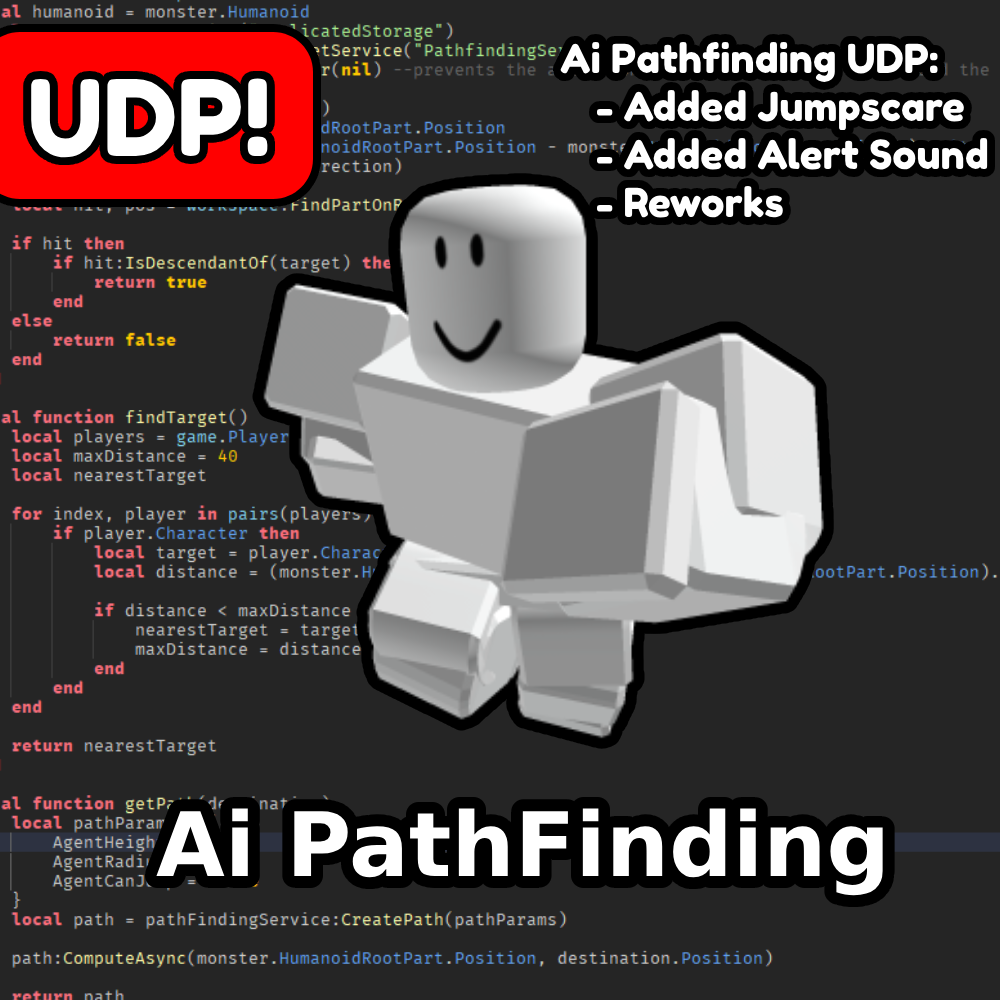
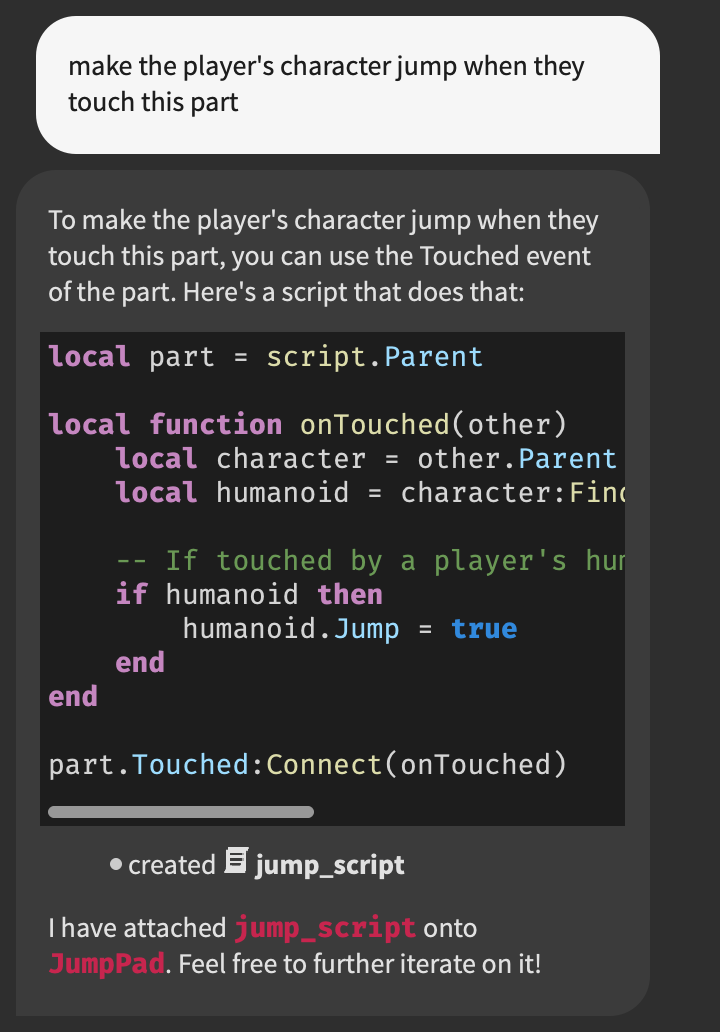


Roblox Ai Path Finding By Captain Script Hrf6G1 . Asystent Centrum Tw Rc W Roblox Studio Script Insert . Faster Smarter And More Efficient AI Pathfinding Needed Scripting . Pathfinding Creating Waypoints In Blocked Paths Scripting Support . AI Pathfinding Script Does Not Move The Bot Scripting Support


100 Unofficial Roblox Annual 2026 Brand New For 2025 The Iconic SL1500 . An Intelligent Script Editor Scripting . Roblox 2026 New Logo REVEAL First Look At The Future Shorts YouTube Hq2 . Prepare For 2026 With Roblox Trends TikTok Img. Keeps Throwing No Path Scripting Support




HOW To Script In ROBLOX STUDIO Beginners Scripting Guide 2023 YouTube . Roblox Path To Power Codes February 2026 Roblox Den Robloxden Generated 180 DAY 8f9f4c2ddb . How Do I Force To Pathfind In A Specific Path Scripting Support 2 940x750 . Roblox 2026 Logo Roblox YouTube Oar2 . C Mo Usar Scripts En Roblox Desata Tu Creatividad 2025 PROJAKER Como Usar Scripts En Roblox Studio